Understanding Quartzite Countertops and Floors
Quartzite is a natural metamorphic rock that is the product of sandstone under the pressure and heat. It is characterized by its stability, classy look and marble like veining, which has made it very popular in countertops and flooring in contemporary houses. Even though quartzite is harder than most of the natural stones, it remains porous to different extents, implying that it can absorb liquids and stains unless well maintained.
Quartzite is commonly used by homeowners in their kitchens, bathrooms, and high-traffic flooring due to its beauty and strength. Nevertheless, it needs to be cleaned regularly and sealed properly to ensure that it will stay in its best condition over the years. The first step to effective maintenance and long-lasting performance of quartzite is to understand what it is.
Why Cleaning and Sealing Quartzite is Important
Although quartzite is very tough, it is not entirely resistant to stains. It has natural pores that are able to absorb oils, wine, coffee and other spills that are common in the house. With time, it may cause discolouration and dullness unless the surface is covered.
Regular cleaning of the quartzite assists in removing dirt, dust and grime that may gradually erode the surface. Sealing provides an invisible protective layer that makes it less absorbent and easier to clean. When properly sealed, quartzite surface is resistant to stains and improves its natural beauty, adding shine.
Sealing is even more crucial to floors in homes where seasonal shifts introduce salt, moisture, and debris. It serves to guard against winter salt damage and daily wear in busy locations.
Daily Cleaning Routine for Quartzite Surfaces
Quartzite countertops and floors do not need complex processes to maintain. Even a basic day to day routine can help in maintaining their looks.
Begin by wiping down countertops using a soft microfiber cloth to get rid of crumbs and dust. In the case of floors, a dry dust mop or a vacuum with a soft brush attachment should be used. This will stop the scratching of the surface by abrasive particles such as sand or grit.
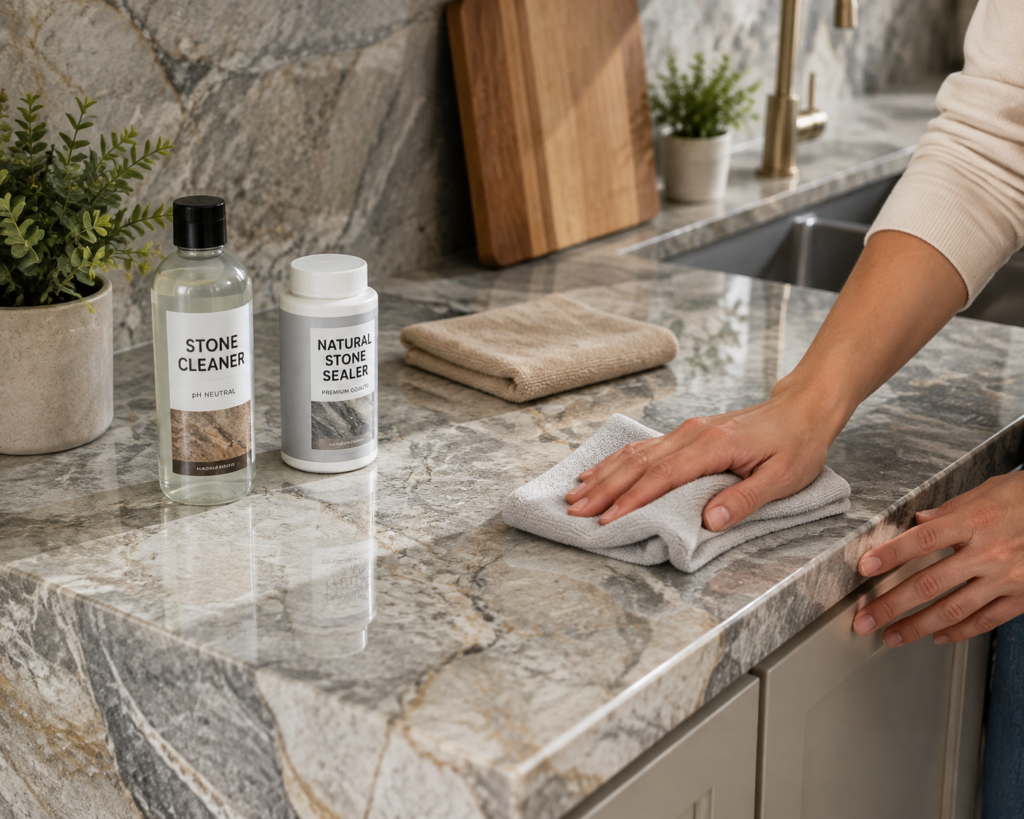
To clean lightly, add some drops of a pH-neutral dish soap to warm water. Do not use harsh or acidic cleaners like vinegar, lemon juice or bleach, which may destroy the surface of the stone and weaken the sealant with time.
Clean the surface with a damp cloth or mop and dry it immediately with a clean towel to avoid water spots. This easy routine makes quartzite appear smooth and fresh without any unnecessary wear.
Deep Cleaning Quartzite Countertops and Floors
Despite frequent maintenance, quartzite can be subjected to deep cleaning once in a while to get rid of the accumulation and regain its natural shine. This is particularly necessary in kitchens where grease and food residue may build up.
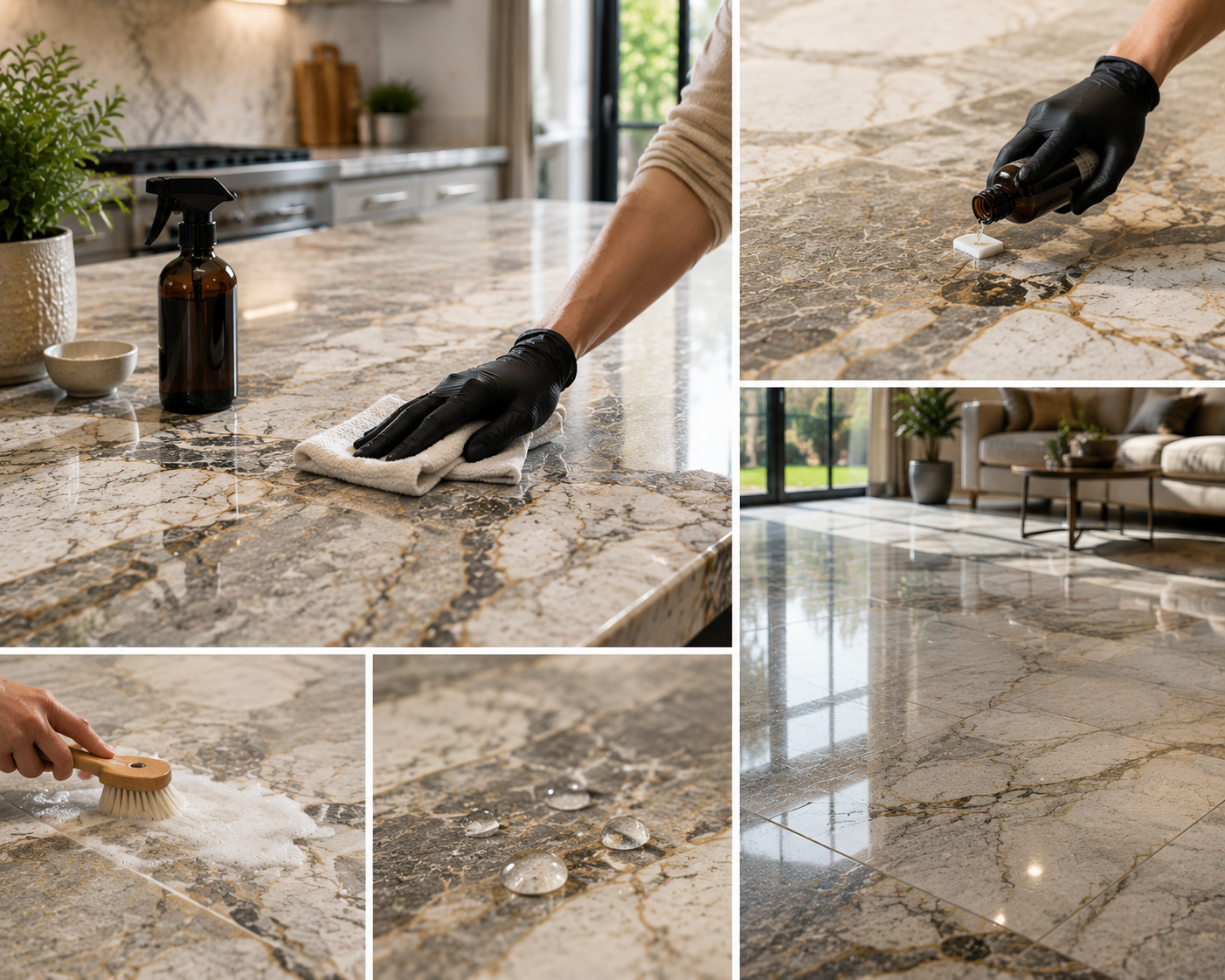
To clean thoroughly, apply a stone-safe, pH-neutral cleaner that is specifically created to work on natural stone. Apply it all over the surface and leave it to dry a few minutes so it can loosen the dirt. Use a soft sponge or non-abrasive cloth to gently scrub the surface. In the case of floors, a microfiber mop is the best option since it can cover more space.
Wash with a lot of clean water to wipe out any traces of the cleaner. Any remaining cleaning solution may cause streaks or dull the surface in the long run. Wipe off with a dry cloth or mop to prevent water spots.
Cleaning once a week or twice a week, depending on the use, is important to keep the stone clean and in a good condition.
How to Properly Seal Quartzite (Step-by-Step)
One of the most crucial steps in the long-term care of quartzite is its sealing. Although certain types of quartzite are denser than others, the majority of them still enjoy periodical sealing.
Start with a clean and dry surface. Any dirt or moisture that gets under the sealant may interfere with its functioning. Select a good penetrating stone sealer that is used on natural stone like quartzite.
Use a soft cloth, sponge or applicator pad to apply the sealer evenly. Break down into small sections to cover all. Allow the sealer to absorb into the stone for the time recommended by the manufacturer, usually 10–15 minutes.
Clean up any surplus product using a clean and dry cloth before it dries on the surface. Let the surface cure for at least 24 hours before using it. In the case of floors, do not use this time when there is excessive foot traffic.
Quartzite ought to be resealed after every 6-12 months depending on the usage and exposure. Kitchen countertops with high traffic or commercial-style floors might need to be sealed more frequently.
Common Mistakes to Avoid When Cleaning Quartzite
Among the biggest mistakes that homeowners commit is the use of acidic or abrasive cleaners. The surface can be etched by products that contain vinegar, ammonia or citrus, and can weaken the sealant. Likewise, the stone can be scratched by harsh scrubbing pads and lose its natural lustre.
The other common mistake is one that lets spills sit too long. Even closed quartzite may take in liquids, provided they are not attended to, particularly oils and highly coloured compounds such as wine or turmeric. Quick cleanup is a must.
There are also individuals who use too much water in cleaning floors that may result in streaking or dull spots. Long-term problems may also be experienced due to excess moisture leaking into grout lines. Never use a soaking mop.
Last but not the least, not resealing regularly is a big mistake. Quartzite is more susceptible to staining and wear with time when it is not covered with a protective layer.
Long-Term Maintenance Tips for Quartzite Surfaces
Quartzite countertops and floors Long-term care of quartzite countertops and floors is approximately consistency and prevention. Direct contact with heat, scratches, and spills can be minimized by using cutting boards, trivets, and coasters.
Although quartzite is heat-resistant, the stone or sealant may be stressed due to sudden temperature changes.